
A builder choosing a model needs a simpler answer than a leaderboard graphic: what can I call today, what does it accept, and what evidence says it will finish my task? Alibaba's November 16 release gives a clear answer to the first two questions for Qwen4-Max. The third still needs independent testing.
Qwen4-Max is available as a hosted production model. Smaller open-weight Qwen4 models are promised for later, so this release should not be described as an open-weight download.
What shipped?
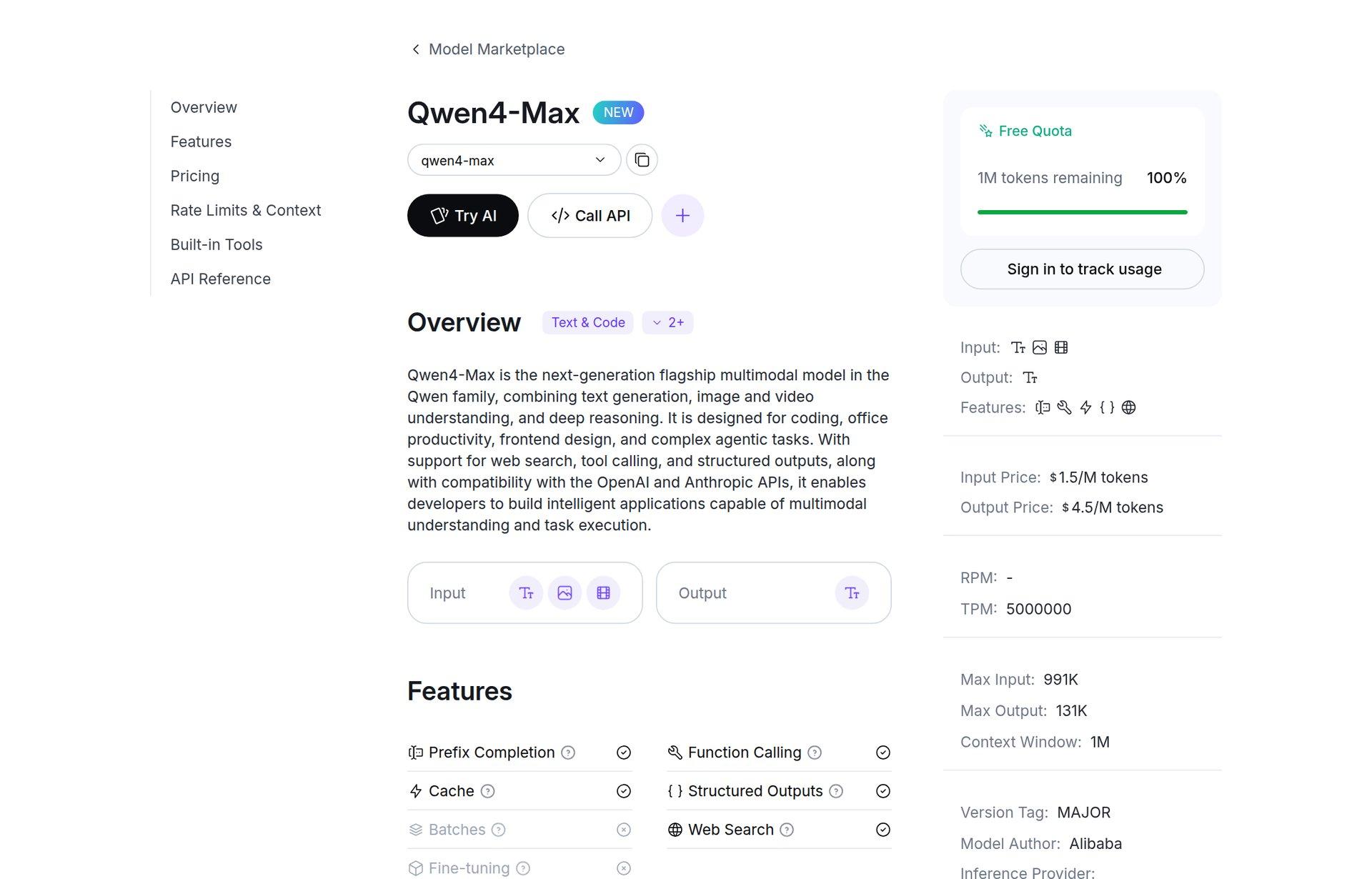
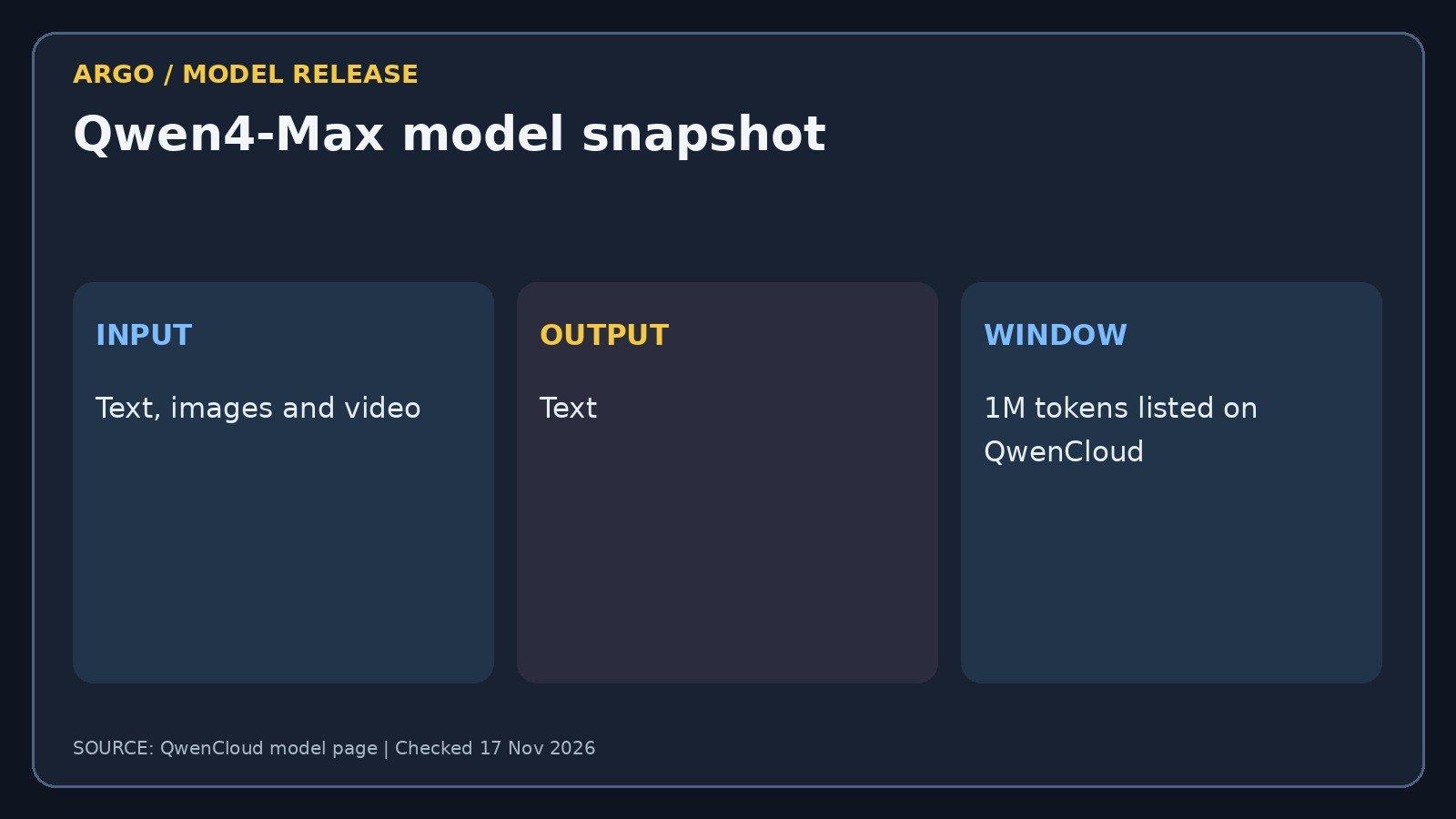
Alibaba lists the production model as `qwen4-max` in Model Studio. It accepts text, image and video input and produces text. Its API supports function calling, web search and structured JSON output. Those features make it usable in a tool-using agent today, subject to the provider's access rules and a builder's own evaluation.
A separate qwen4-max-preview appeared earlier under a Token Plan. The preview documentation describes a November 11 to 25 window and recommends moving to the production model. The two names are not interchangeable when reporting an evaluation: a result from a preview can reflect a different model state from the production API.
How does the sparse design work?
Alibaba says the model has 2.4 trillion total parameters but activates 71 billion per token. Parameters are learned weights. In a sparse mixture-of-experts model, a routing mechanism chooses a subset of those weights for each token rather than using the entire model every time. Imagine a large workshop where only the relevant specialist benches are powered for a particular job. The analogy stops at quality: which benches are selected, and how reliably they cooperate, must still be measured on real tasks.
The documented context window is one million tokens. That is an input-capacity limit, not a guarantee that the model will remember or correctly use every detail in a long repository or conversation. For an agent, successful tool use, recovery after errors, and cost per completed task matter at least as much as the maximum window.
What do the numbers establish?
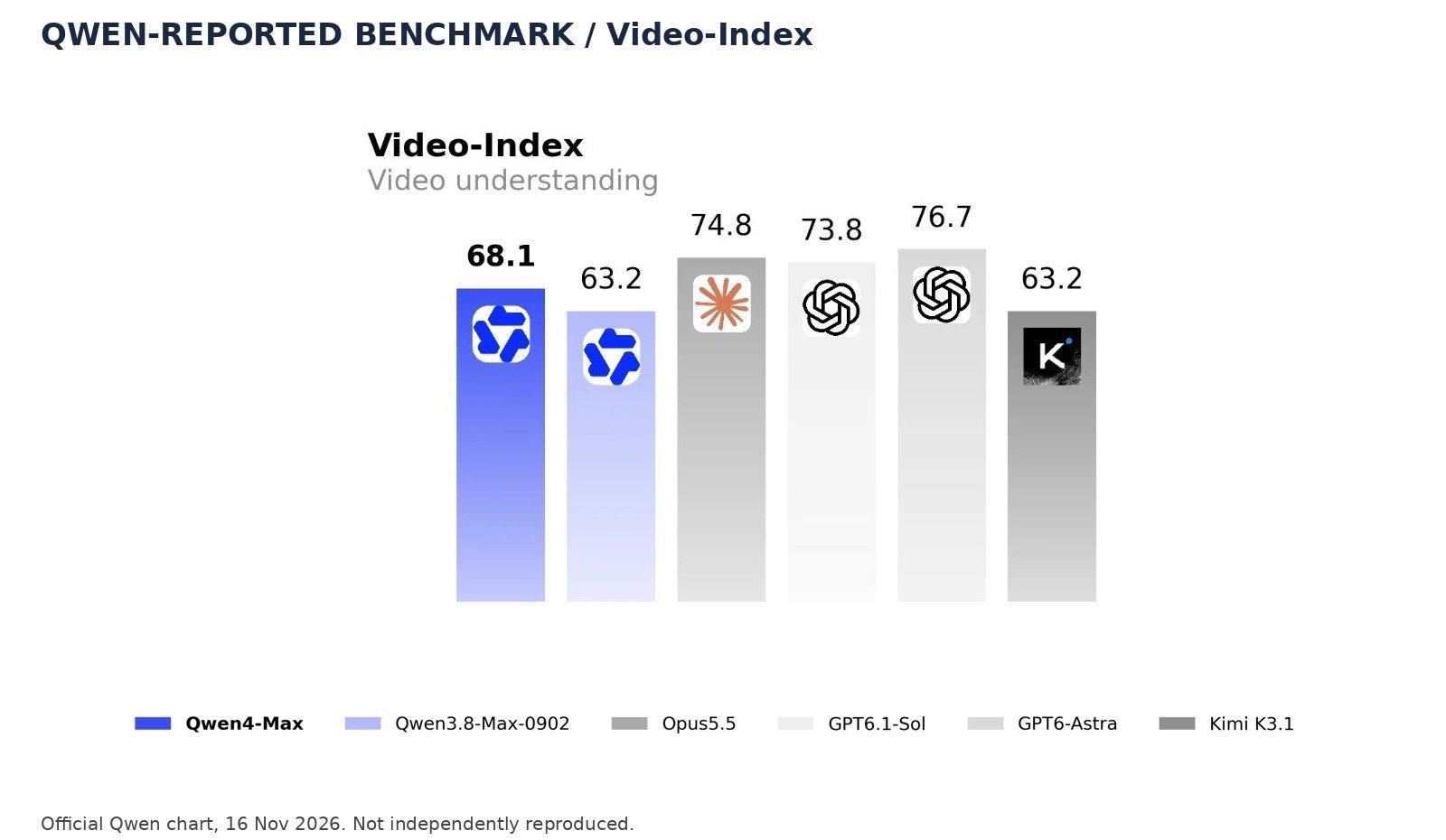
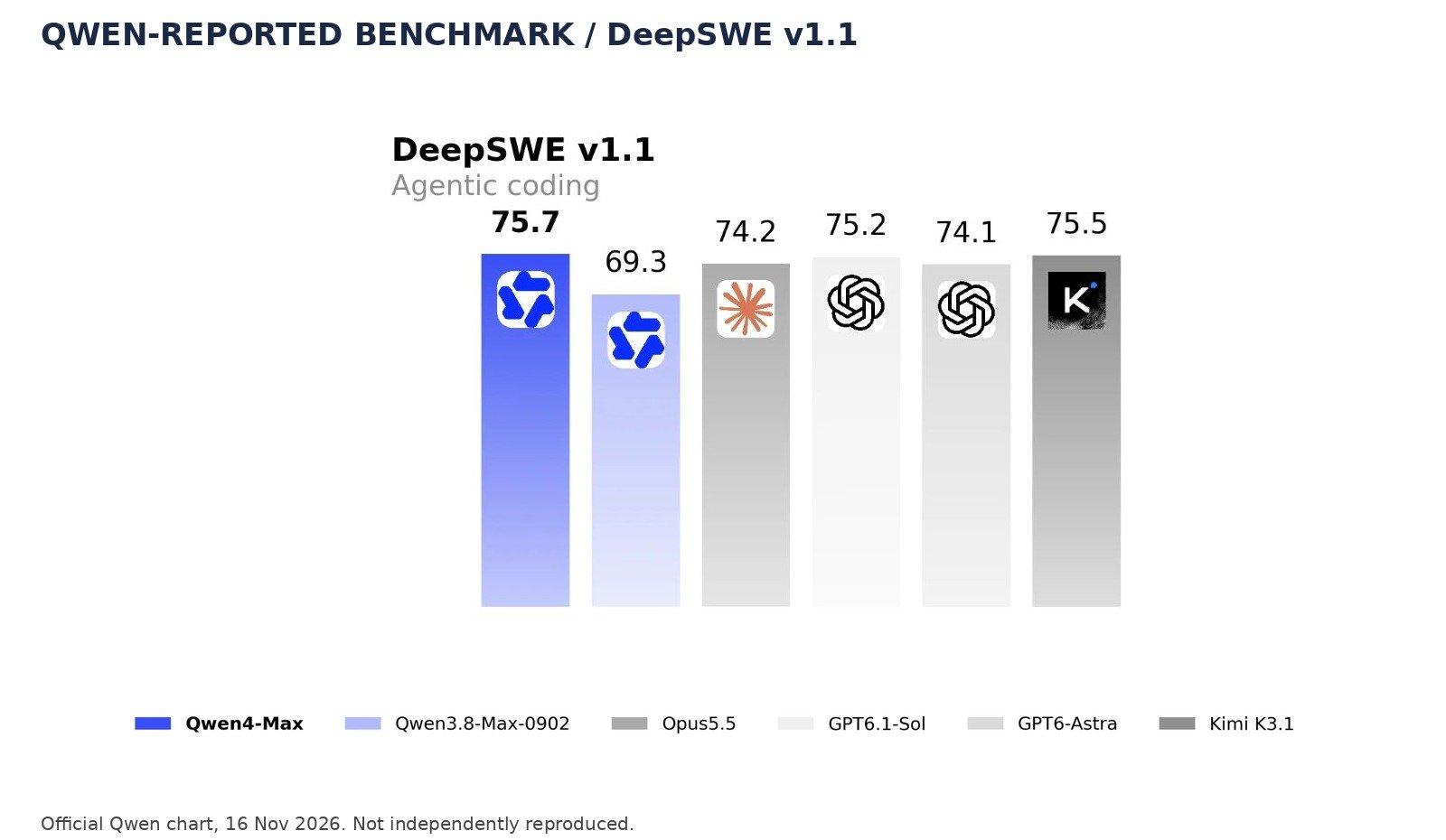
Alibaba reports that on its proprietary Work360 benchmark, Qwen4-Max used 35% fewer tokens than Qwen3.8-Max at High reasoning effort and cut average cost per task by about 60%. It also reports sixth place on Code Arena. The comparison names a predecessor and an effort setting, which is useful. But the Work360 tasks and scoring are not independently reproducible from the release alone, and leaderboard ranks can change. These are vendor-reported results, not a field test by Argo.
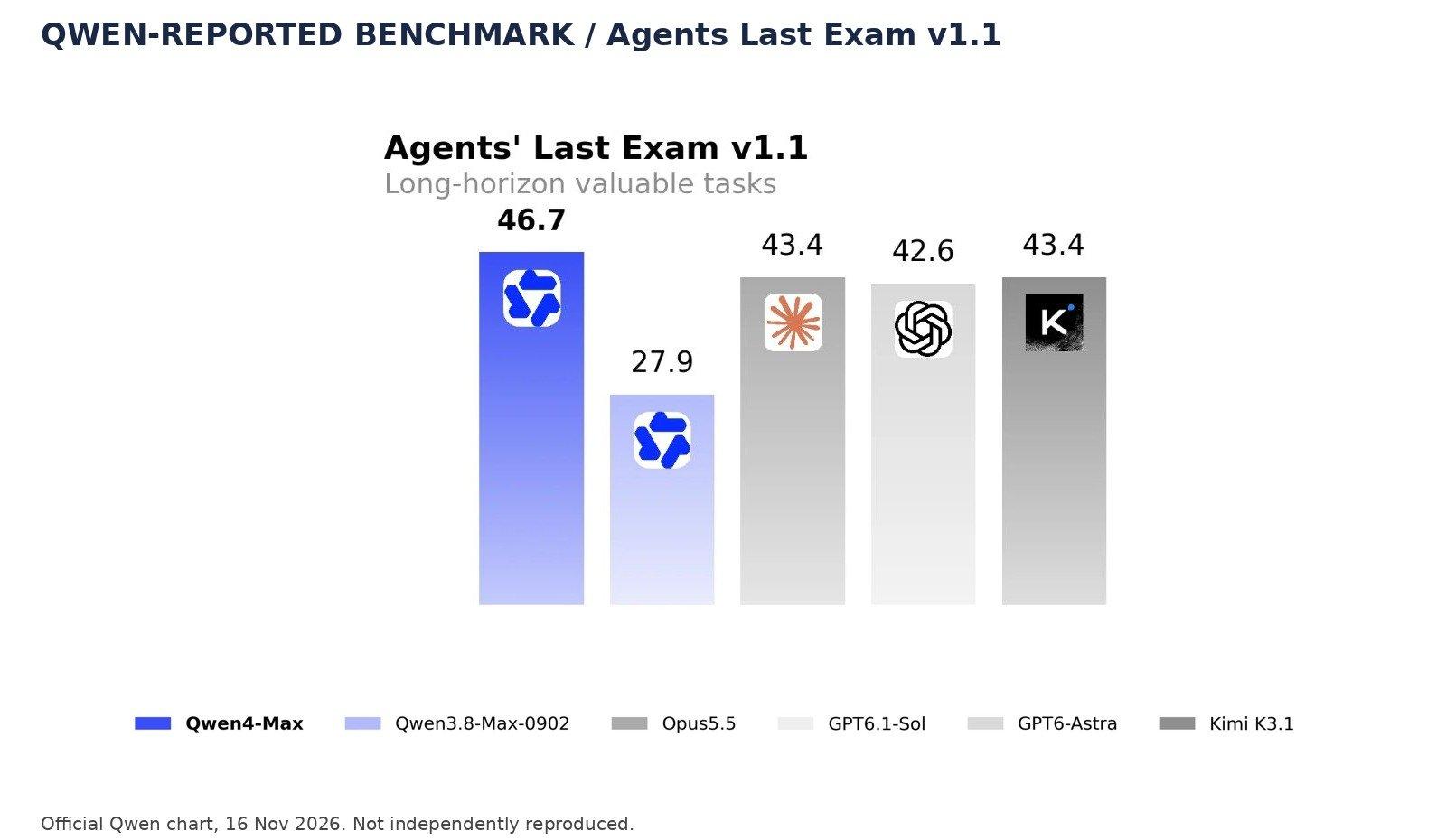
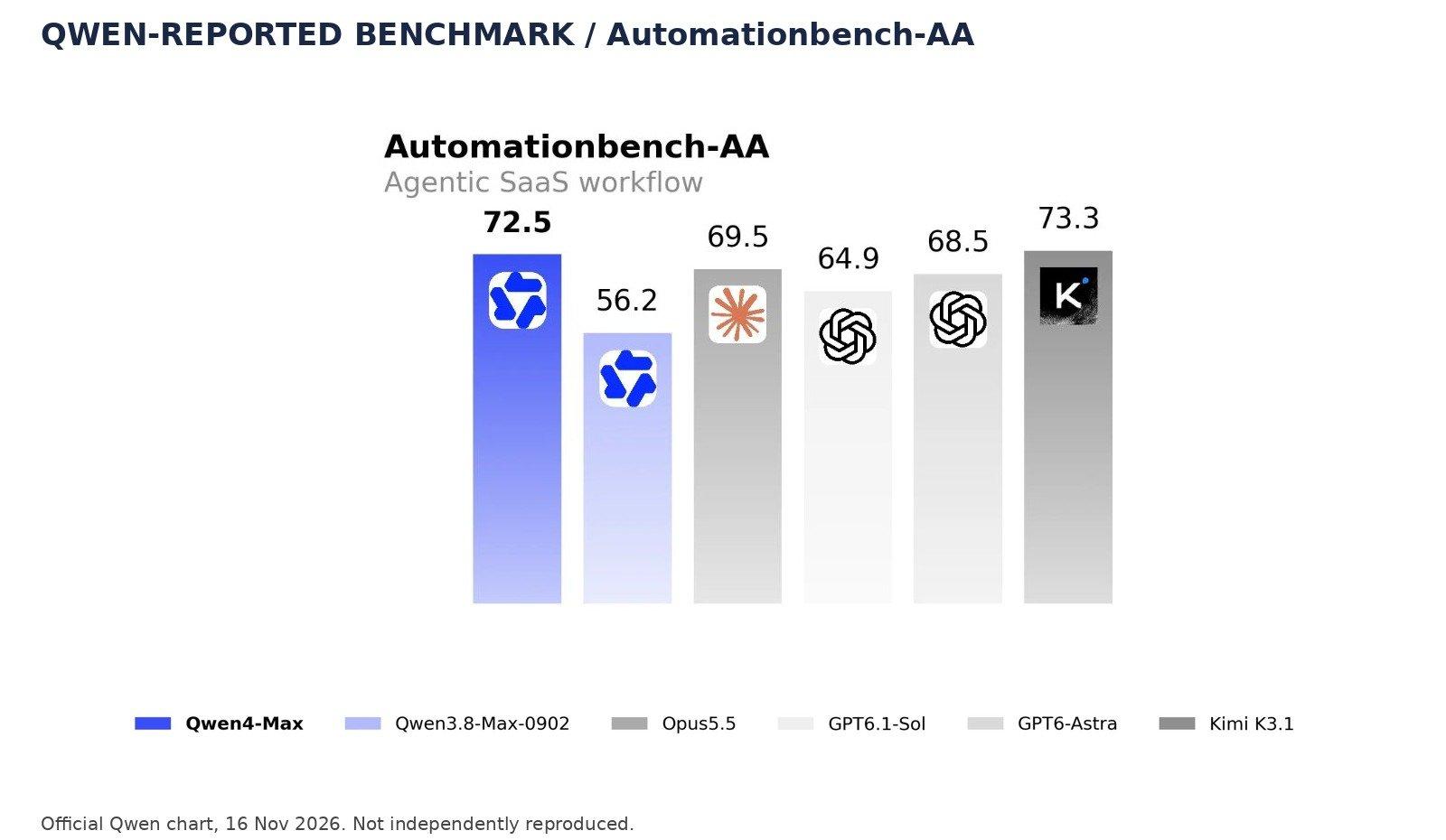
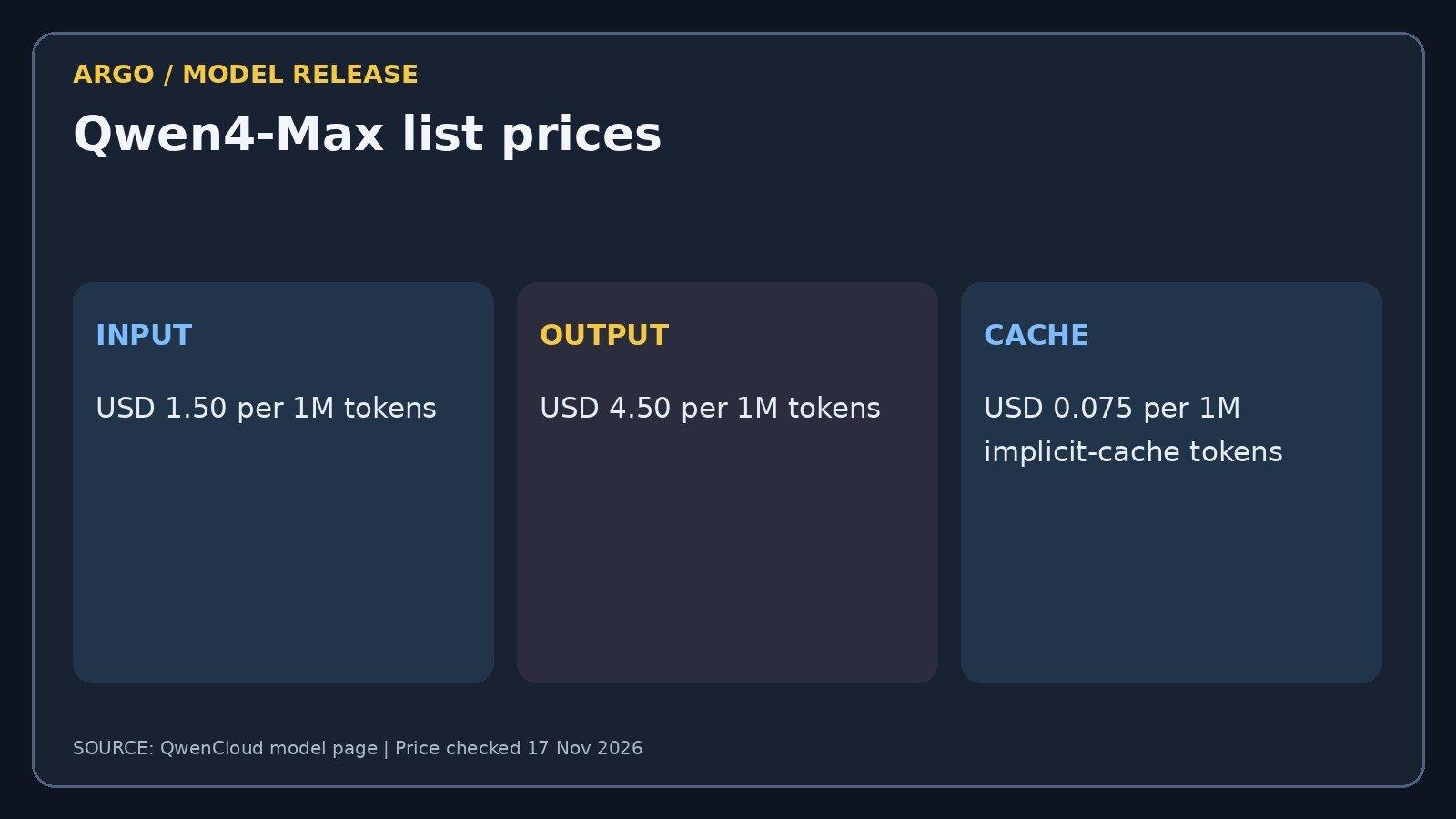
The production documentation also matters for pricing. Alibaba's announcement cites a low cached-input price. A cache hit is a specific billing condition; it is not the price of every input token or every agent run. Before adopting the model, test a representative workflow, count retries and output tokens, and compare completed-task cost under the region and plan actually used.
What should a builder do next?
Use the production model ID, not the retiring preview ID. Test a small suite of real tasks with fixed prompts and tools. Record completion rate, latency, token consumption and the exact API region. Keep the open-weight question separate: Alibaba has announced smaller open-weight Qwen4 models, but has not released them in this announcement.
Read the release and model documentation, and follow more model analysis at Argo.